
The Sustainable Eel Group brings together scientists, conservationists, businesses and policymakers to support the recovery of the European eel. Working across research, conservation and commercial practice, the organisation seeks to establish a more sustainable future for the species.
The challenge was to mark fifteen years of SEG while reflecting on its achievements, strengthening communication with its stakeholders and looking towards the future. The work needed to celebrate the organisation’s history, improve communication with certificate holders and policymakers, and establish ways to explore the wider social impact of eel conservation.
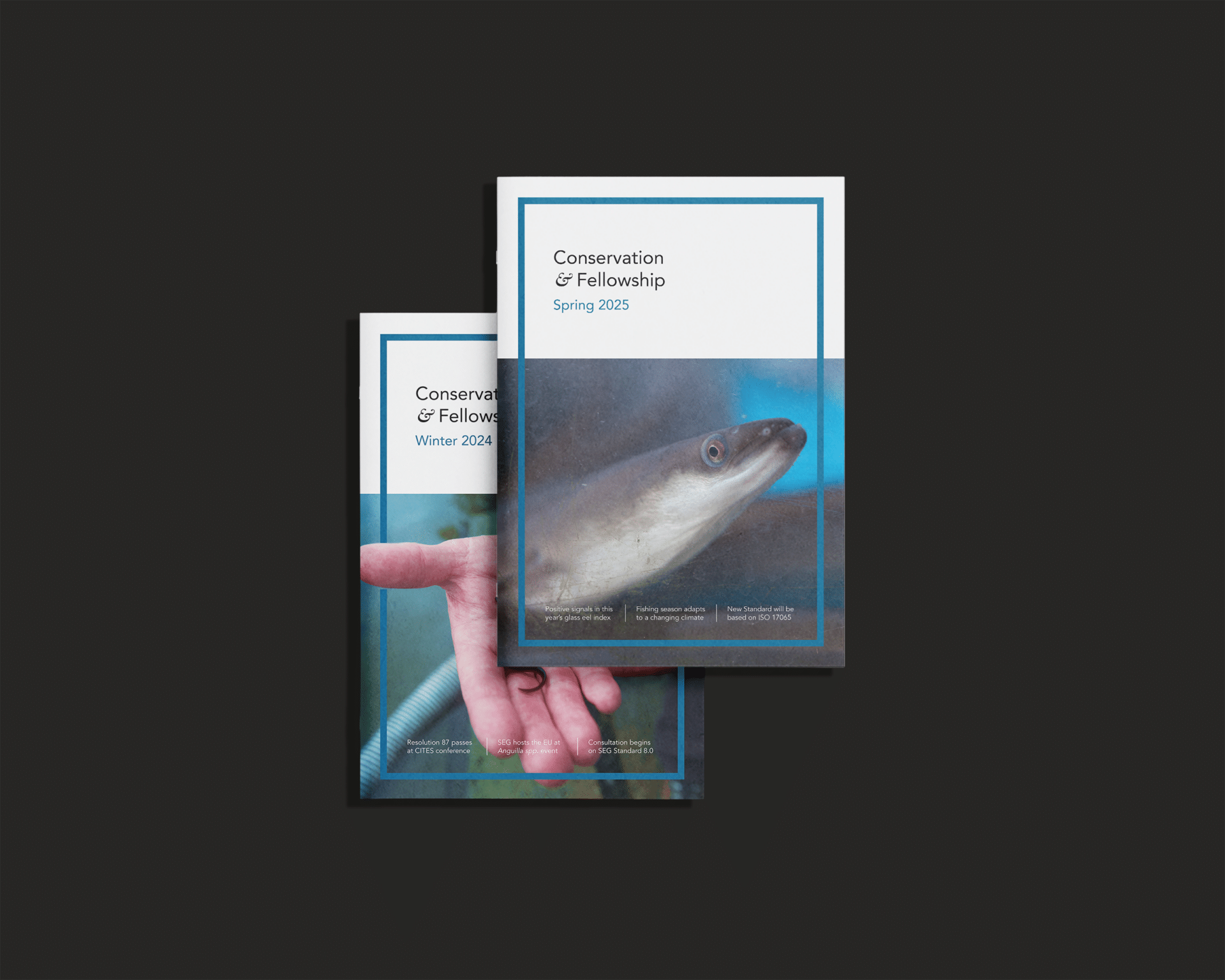
Through research, interpretation and design, three outputs addressed these themes of past, present and future: a commemorative book, a new quarterly stakeholder magazine and research materials to support SEG’s future social impact work.
Anniversary Book
The commemorative book reflects on fifteen years of SEG, bringing together the milestones, partnerships and initiatives that have shaped its development. Editorial writing, archival images and considered visual presentation tell the story of the organisation’s work, documenting the progress made and the collective effort behind eel conservation.
Stakeholder Magazine
A new quarterly magazine provides a platform for sharing research, developments and perspectives from across SEG’s network. Designed to improve communication with certificate holders, policymakers and the wider stakeholder community, the publication brings current work into focus and creates an ongoing connection between the people working towards eel recovery.
Research Materials
Surveys, questionnaires and oral history guidance were developed to support SEG’s exploration of the social impact of eel conservation and management. Designed to gather experiences and perspectives from the people and communities connected to the eel, the materials established a framework for collecting evidence and understanding the human dimensions of the sector, helping inform SEG’s work in the years ahead.